
When you want to refresh a space, painting is often the best way to do it. Interior painting focuses on walls, ceilings, and trim inside a building, while exterior painting protects and enhances surfaces exposed to the weather.
Both types of painting need proper preparation, tools, and techniques for a lasting finish.
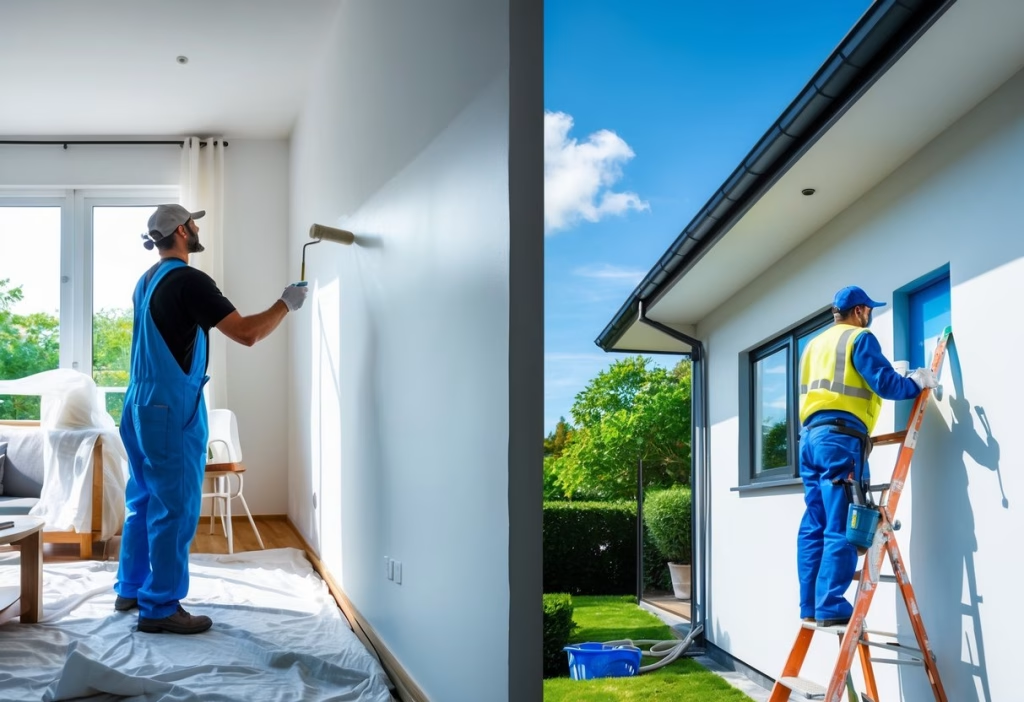
In Pretoria’s climate, choosing the right paint type and finish is as important as choosing the color. Interior paints must handle daily wear, cleaning, and changing light.
Exterior paints need to resist sun, rain, and temperature changes. This keeps your property looking good and protects the surfaces.
Defining Interior and Exterior Painting
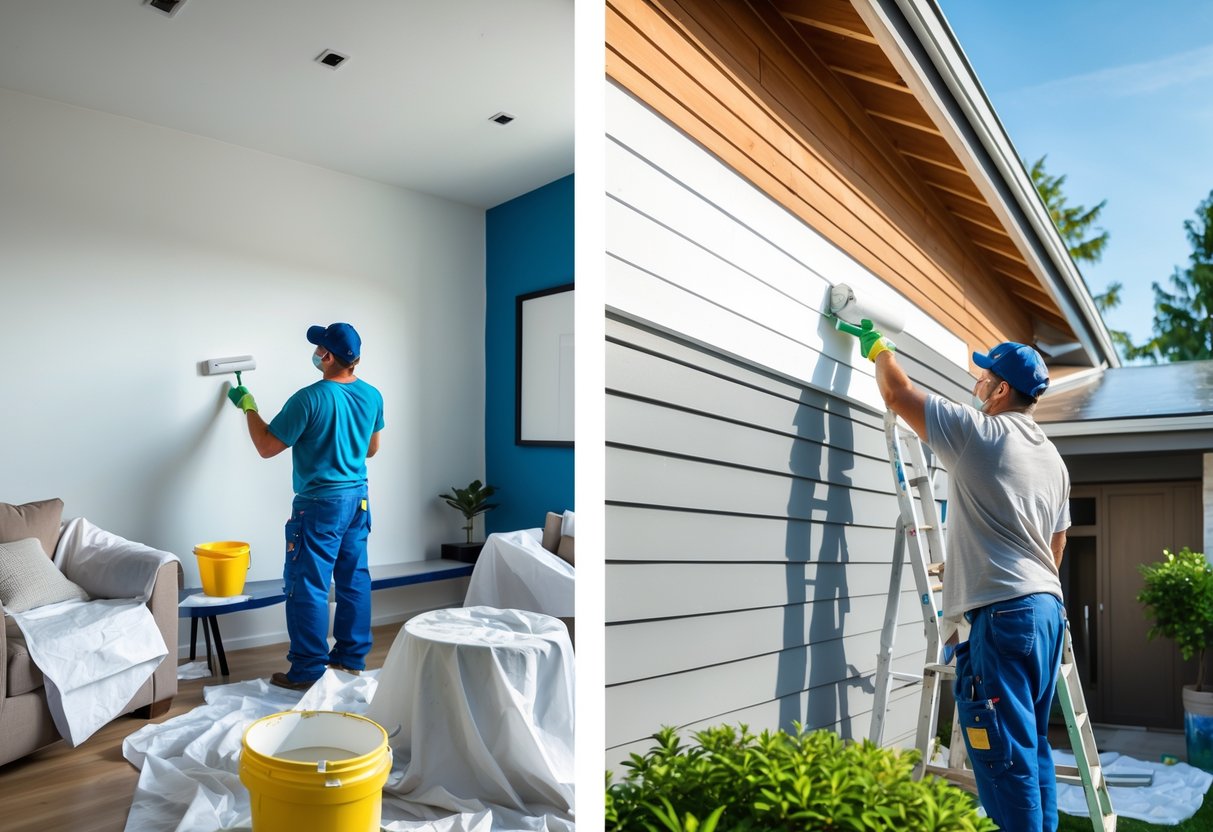
We use different methods, tools, and products for painting inside or outside a building. Each location has unique conditions that affect how paint performs and how surfaces are prepared.
What Is Interior Painting?
Interior painting covers walls, ceilings, trim, and other surfaces inside a building. We prepare these areas by cleaning, sanding, patching holes, and applying primer if needed.
The aim is to create a smooth finish that looks good and protects surfaces from wear. We use interior paint that has low odour, is easy to clean, and resists scuffs.
Common finishes include:
| Finish Type | Common Use | Sheen Level |
|---|---|---|
| Matte/Flat | Ceilings, low-traffic walls | No sheen |
| Eggshell | Living rooms, bedrooms | Soft sheen |
| Satin | Kitchens, bathrooms | Medium sheen |
| Semi-gloss | Trim, doors | High sheen |
In Pretoria, we also think about humidity, which can affect how paint dries and lasts indoors.
What Is Exterior Painting?
Exterior painting covers outside surfaces like walls, doors, and fascia boards. We prepare these by removing old paint, fixing cracks, cleaning with pressure washing, and priming for better adhesion.
We use exterior paint that resists UV rays, moisture, and temperature changes. This helps keep the color and prevents peeling.
Key benefits include:
- Weather protection from sun, rain, and wind
- Improved curb appeal for homes and businesses
- Extended lifespan of exterior materials
Pretoria’s climate brings strong sunlight and seasonal rain. Picking the right paint and applying it correctly is important for long-lasting results.
Why Paint Type Matters
Using the right paint type is important for durability and appearance. Interior paint is made for easy cleaning, smooth application, and low fumes.
It is not suitable for outdoor weather. Exterior paint has additives for water resistance, UV protection, and flexibility to handle temperature changes.
Using exterior paint indoors can cause strong odours and an unsuitable finish. We always match the paint type to the location and surface material.
This means thinking about sunlight, moisture, and the finish you want before starting any job.
For more details, see house painter and decorator.
Core Differences: Paint Composition and Application
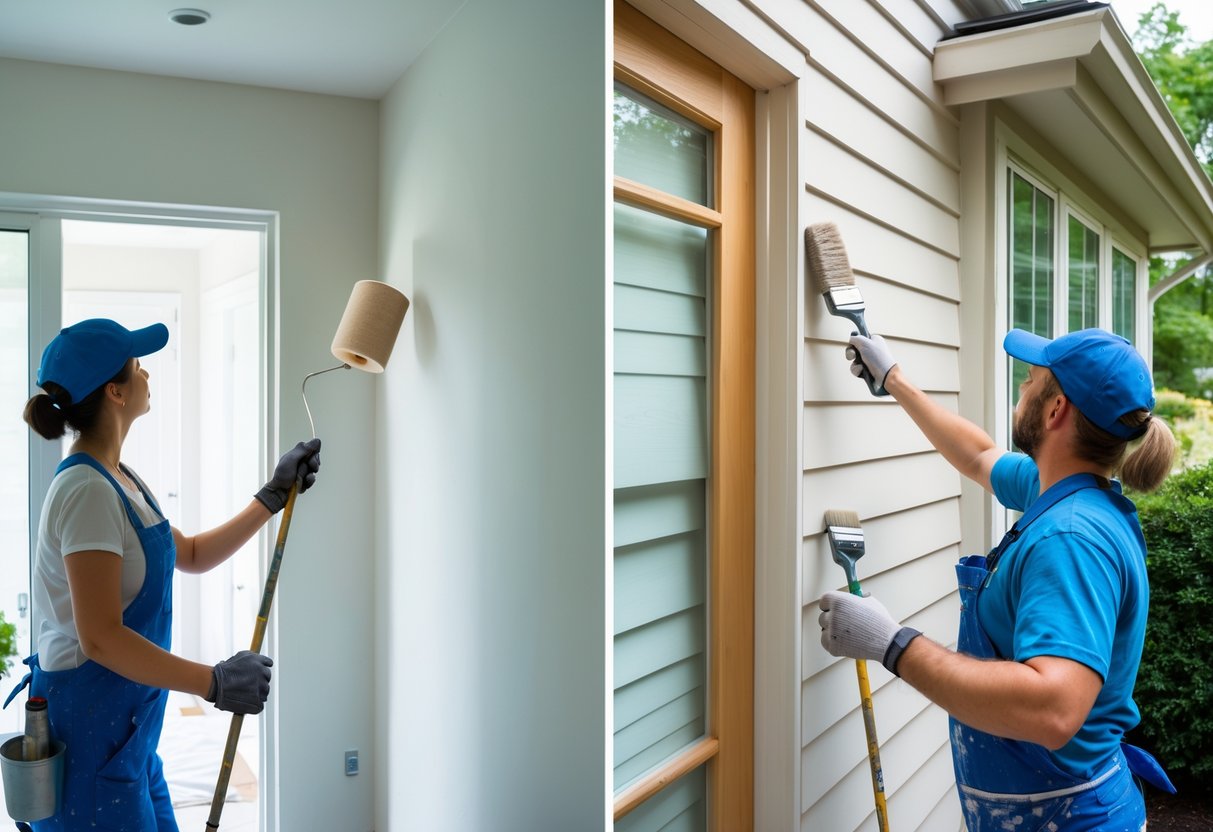
Interior and exterior paints have different chemical structures and environmental impacts. They also need specific preparation and application methods for best results.
Chemical Makeup and Additives
Interior paints use resins that give a smooth, washable finish with low odour. Exterior paints use stronger binders like acrylic resins to handle rain, sun, and temperature changes.
Additives are important. UV blockers prevent fading, and mildew inhibitors protect against mould in damp areas.
Exterior coatings have extra additives for stain resistance and flexibility. Solvents are different too.
Water-based latex is common indoors for easy cleanup. Solvent-based paints outdoors improve hardness and weather resistance.
| Feature | Interior Paint | Exterior Paint |
|---|---|---|
| Resin Type | Vinyl or acrylic blends | 100% acrylic or modified alkyd |
| Additives | Scuff resistance, smooth finish | UV blockers, mildew resistance |
| Solvent Base | Mostly water-based | Water or solvent-based |
VOC Levels and Health Impacts
Volatile organic compounds (VOCs) are chemicals released as paint dries. High VOC levels indoors can cause strong odours and affect air quality.
We use low-VOC or zero-VOC paints for most interior projects to reduce health risks. Exterior paints may have higher VOCs because they need stronger solvents and resins.
Modern paints balance performance with environmental safety. Indoors, we ventilate well and use protective gear.
Outdoors, VOC concerns are lower due to fresh air, but we still use products that meet South African standards.
Surface Preparation and Paint Adhesion
Good surface preparation is key for strong paint adhesion. Indoors, we clean walls, fill cracks, and use a primer to help paint stick.
For exteriors, we often start with power washing to remove dirt, loose paint, and mildew. Then we fix damaged spots and use primers made for masonry, timber, or metal.
Exterior primers usually have sealers to block moisture, while interior primers focus on smoothness and stain blocking. The right primer makes paint last longer and means fewer topcoats are needed.
Painting Techniques and Application Methods
Application methods depend on the area and finish you want. Indoors, we use rollers and brushes for even coverage and control in small spaces.
Outdoors, spraying is often used for speed and even coverage, especially on textured walls. We adjust our methods based on weather to avoid problems like blistering.
Several thin coats work better than one thick coat. For exterior work, we allow enough drying time between coats to protect against Pretoria’s sun and rain.
Frequently Asked Questions
We use interior and exterior paints designed for different conditions and needs. Each type has unique properties, costs, and uses that affect durability and appearance.
What are the differences between interior and exterior paints?
Interior paint resists stains, is easy to clean, and keeps its color indoors.
Exterior paint has additives to protect against UV rays, moisture, and temperature changes. It is more flexible for surfaces that expand and contract outdoors.
Can exterior paint be used safely on interior surfaces?
We do not recommend using exterior paint indoors. Many exterior paints have higher levels of chemicals and can release more fumes in enclosed spaces.
For health and safety, interior paint is the better choice inside homes and buildings.
How does the cost of interior paint compare to that of exterior paint?
Exterior paint usually costs more because it includes weather-resistant compounds and stronger binders.
Interior paint is generally less expensive, though premium indoor paints can cost as much as some exterior options.
What are the primary uses of interior paint?
Interior paint is used on walls, ceilings, trim, and other indoor surfaces that need to stand up to cleaning and wear.
It is chosen for its smooth finish and wide range of sheen options for indoor lighting.
In what ways is exterior paint specifically formulated for outdoor use?
Exterior paint is made to handle rain, sun, wind, and temperature changes. It resists fading, cracking, and mildew.
It also sticks well to surfaces like brick, stucco, and wood that are exposed to the weather.
Is it possible to mix interior and exterior paints, and if so, what are the implications?
Mixing interior and exterior paints is not recommended. The mixed paint can lose important qualities, such as good adhesion or durability.
Using the right paint for each surface gives better and longer-lasting results.