House painting is more than just adding color to walls. It protects surfaces, improves curb appeal, and can increase property value.
The basics of house painting include preparing the surface, choosing the right paint, and ensuring a smooth finish. Doing these steps well helps the paint job last longer.
At Painting Contractors Pretoria, we use quality materials and proper preparation techniques. Our finishes are chosen to handle Pretoria’s local weather.
We patch cracks, sand rough spots, and mask edges. Each step is done carefully before painting begins.
From exterior walls to interior living spaces, our goal is a clean, even look that lasts. We’ll walk through the main steps of house painting and share tips for a professional result.
Core Steps of House Painting
A good paint job starts with a clean, well-prepared surface. The right materials and a careful application process help paint last longer.
Surface Preparation Essentials
We inspect walls, ceilings, and trim for cracks, peeling paint, or water damage. Any loose or flaking paint is scraped away.
To smooth surfaces, we sand rough areas using sandpaper. Fine grit is used between coats, while medium grit removes old paint.
We clean surfaces to remove dust, dirt, and grease. Usually, mild detergent and water are enough, but tough stains may need a stronger cleaner.
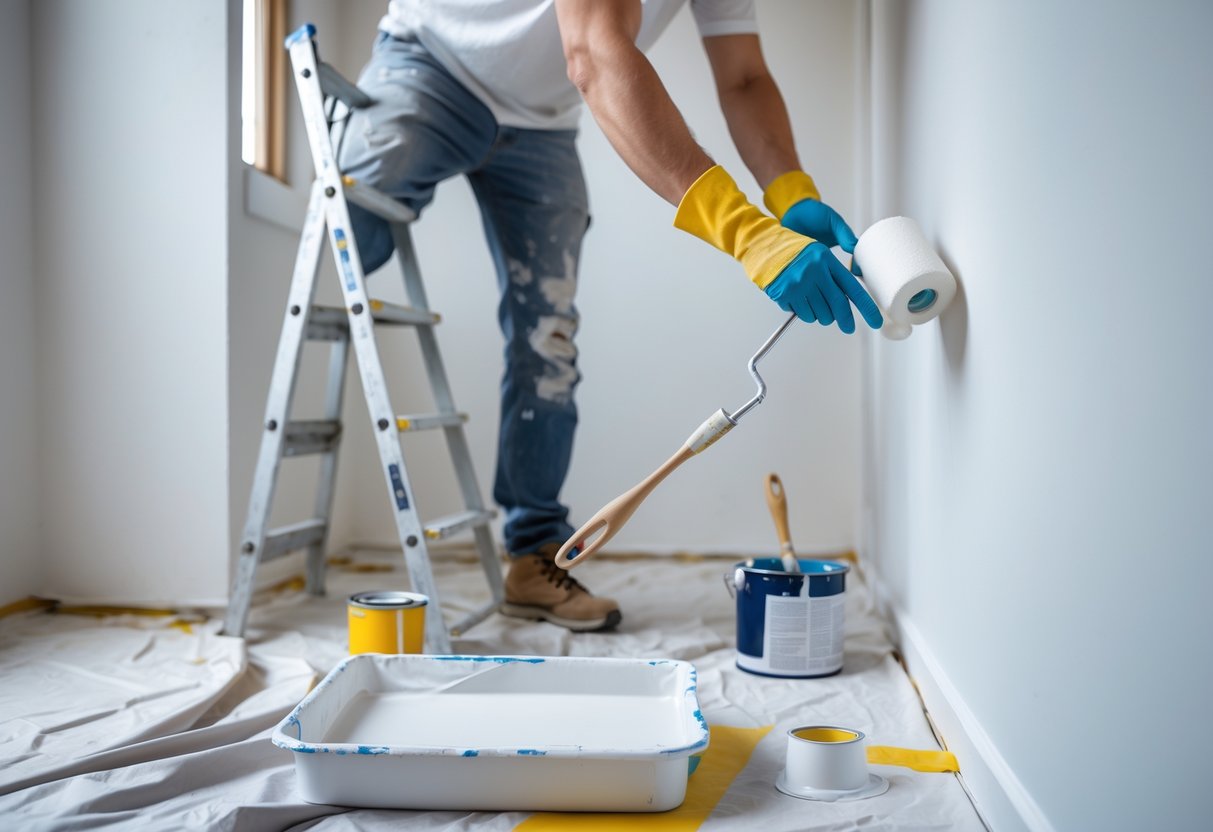
Before painting, we use painter’s tape to protect edges, window frames, and fittings. Drop cloths cover floors and furniture to prevent splatter.
If the wall is bare or patched, we apply primer. Primer helps the paint stick and covers dark colours or porous materials.
Choosing the Right Paint and Tools
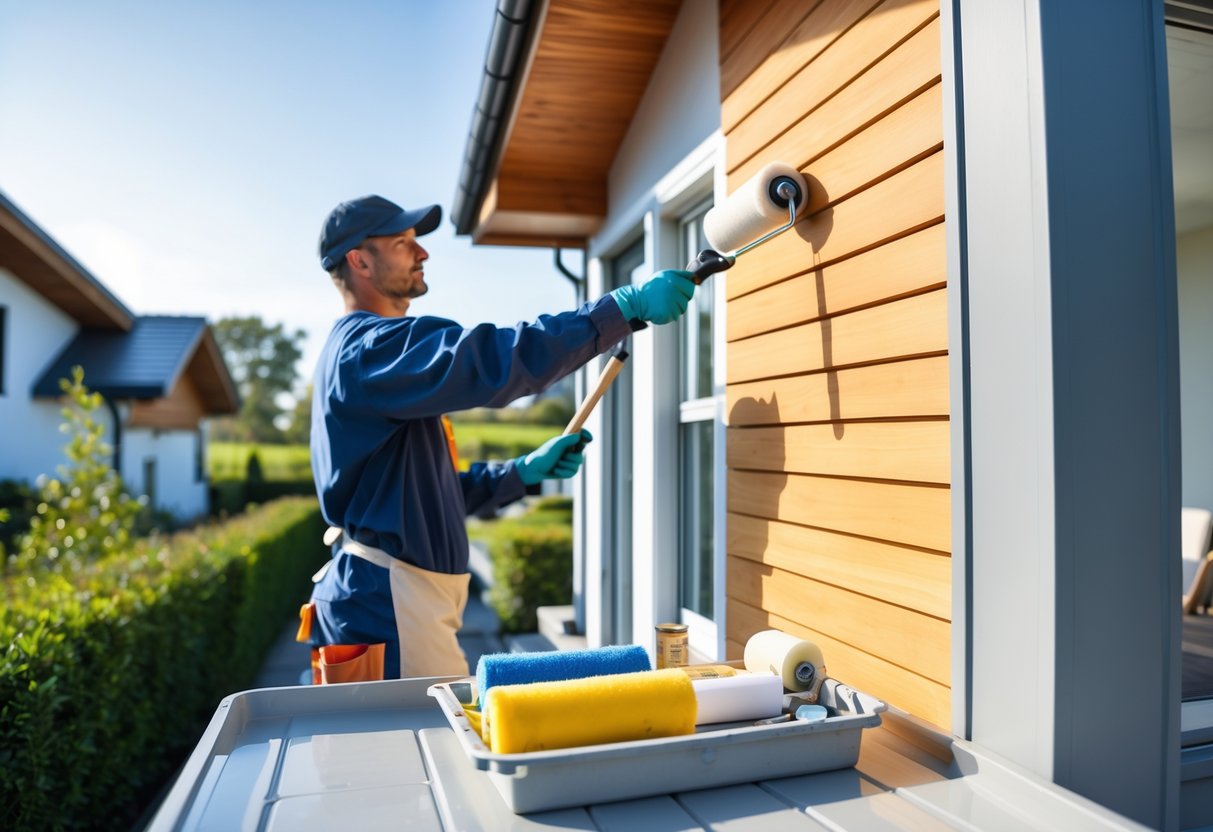
We pick paint based on the surface, location, and finish. For exterior walls, weather-resistant acrylic paints work best. Indoors, washable paints are good for busy areas.
Paint rollers cover large areas quickly. Paint brushes are used for edges and corners.
We may use a paint sprayer for big surfaces, but only after careful masking. This makes the job faster.
A sturdy ladder is important for reaching high spots. We make sure it is stable and tall enough for safety.
We also choose roller nap thickness. Short nap is for smooth walls, while thick nap is for textured surfaces.
Applying Paint: Techniques and Methods
We start at the top and work down to avoid drips. On walls, we use a “W” or “M” motion with rollers to spread paint evenly.
Brushwork begins with cutting in along edges and corners. This gives a neat border.
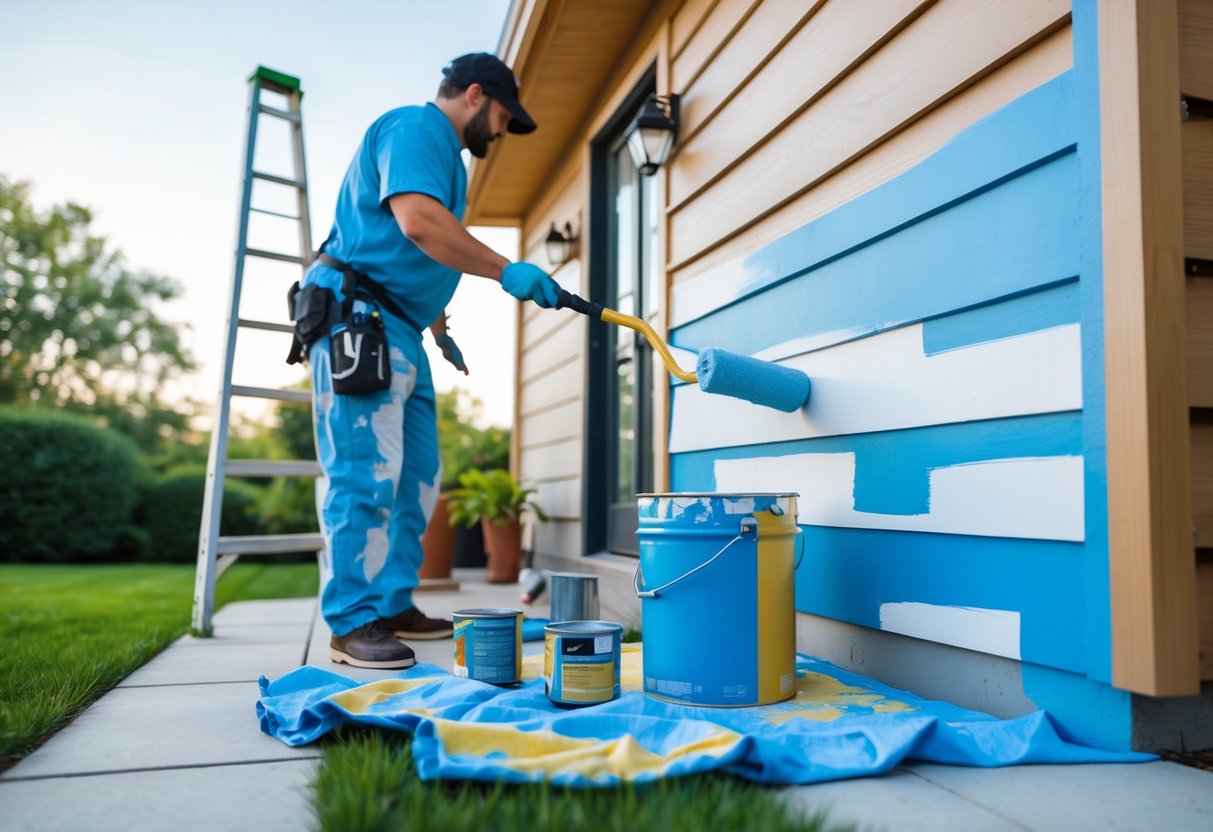
For exterior work, we avoid painting in direct midday sun. Light, even coats are better than one heavy coat, and we let each layer dry before adding another.
When using a paint sprayer, we keep the nozzle at a steady distance and move smoothly. This helps avoid streaks or overspray.
Finishing Touches and Maintenance
We focus on precision and cleanliness to keep painted surfaces looking fresh. Attention to detail at the end of a project helps the paint last longer.
Painting Trim and Details
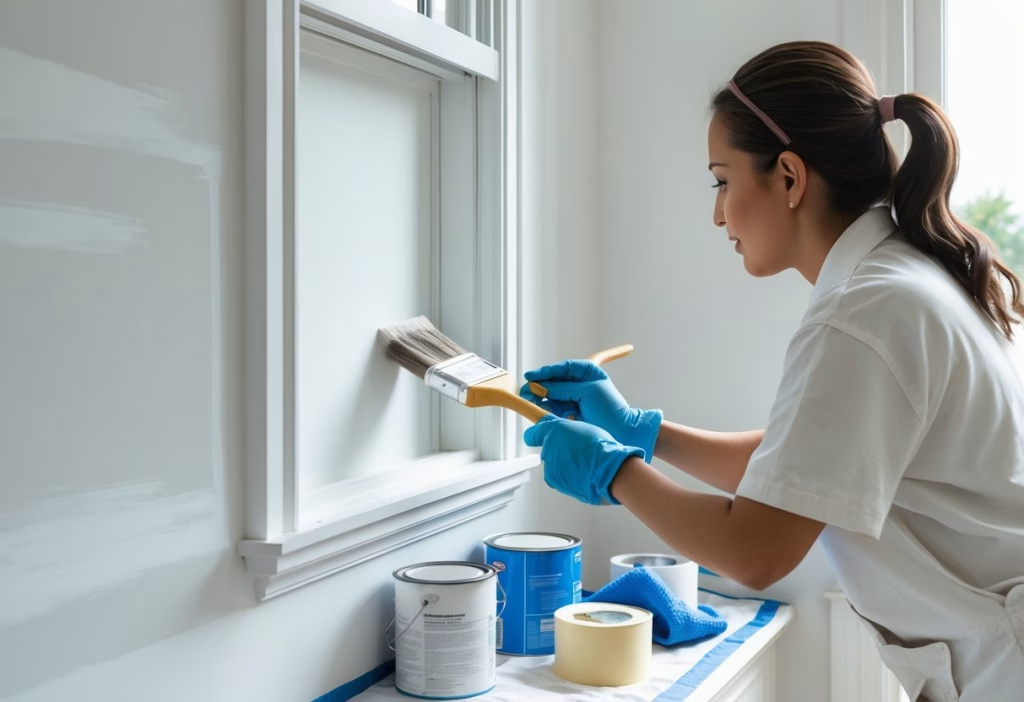
Trim work frames the paint job and affects the final look. We use smaller, quality brushes for crisp lines on skirting boards, window frames, and doors.
Semi-gloss or gloss finishes are used for trim. These finishes are durable and easy to clean.
We mask nearby surfaces with painter’s tape to avoid marks. Removing tape while the paint is still tacky gives a clean edge.
For older homes, we check trim for cracks or gaps. Filling these with caulk improves appearance and keeps out dust and moisture.
Cleaning Up and Storing Supplies
Cleaning up keeps tools in good shape. Brushes and rollers are washed right after use with water for water-based paints or the correct solvent for oil-based paints.
Reusable drop cloths are shaken out and folded. We wipe down ladders and extension poles to remove splatters.
Leftover paint is labeled with the room name and date. Lids are sealed tightly, and paint is stored in a cool, dry place.
We recommend keeping small amounts of leftover paint for future touch-ups. This is especially helpful for exterior areas exposed to Pretoria’s weather.
Maintaining Your Paintwork for Curb Appeal
Regular upkeep keeps your property looking good. We suggest checking painted surfaces yearly for peeling, fading, or mould.
Exterior walls and trim should be washed sometimes with mild soap and water. This removes dust and pollutants that can dull colors.
Touch up chips or scratches quickly to prevent more damage. Keep a record of paint colors and finishes for easy repairs.
In Pretoria, sun and rain can wear paint faster. Quick repairs and regular checks help keep your home looking fresh.
Frequently Asked Questions
What is the correct order of steps for painting a room?
We move furniture and cover floors with drop cloths. Next, we clean and repair walls, then apply painter’s tape to protect edges.
We prime if needed, paint the ceiling first, then the walls, and finish with trim and touch-ups.
What are the essential tools and materials needed for painting a house interior?
We use brushes, rollers, and extension poles for even coverage. Other essentials are painter’s tape, drop cloths, a paint tray, primer, and the chosen paint.
For safety, we use a step ladder and keep a damp cloth for quick clean-ups.
How do I prepare walls before painting?
We clean walls to remove dust, grease, and marks. Cracks or holes are filled and sanded smooth.
If the surface is glossy, we lightly sand it to help the paint stick. Primer is used where needed for a uniform finish.
What are some professional tips for achieving a smooth paint finish?
We use even roller pressure and work in small sections to keep a wet edge. We avoid overloading the brush or roller and apply two thin coats instead of one thick coat.
Between coats, we let the paint dry and sand lightly if needed.
How do I choose the right type of paint for different surfaces in my home?
We match paint type to surface and room needs. Washable, moisture-resistant paint is best for kitchens and bathrooms.
For exterior walls, we use weather-resistant coatings. We also consider if the surface is plaster, wood, or metal before choosing the paint.
What safety precautions should be taken when painting a house exterior?
We make sure ladders or scaffolding are stable before starting.
We wear protective gear such as gloves, masks, and safety glasses.
We keep the area well-ventilated.
We avoid painting in extreme weather conditions.